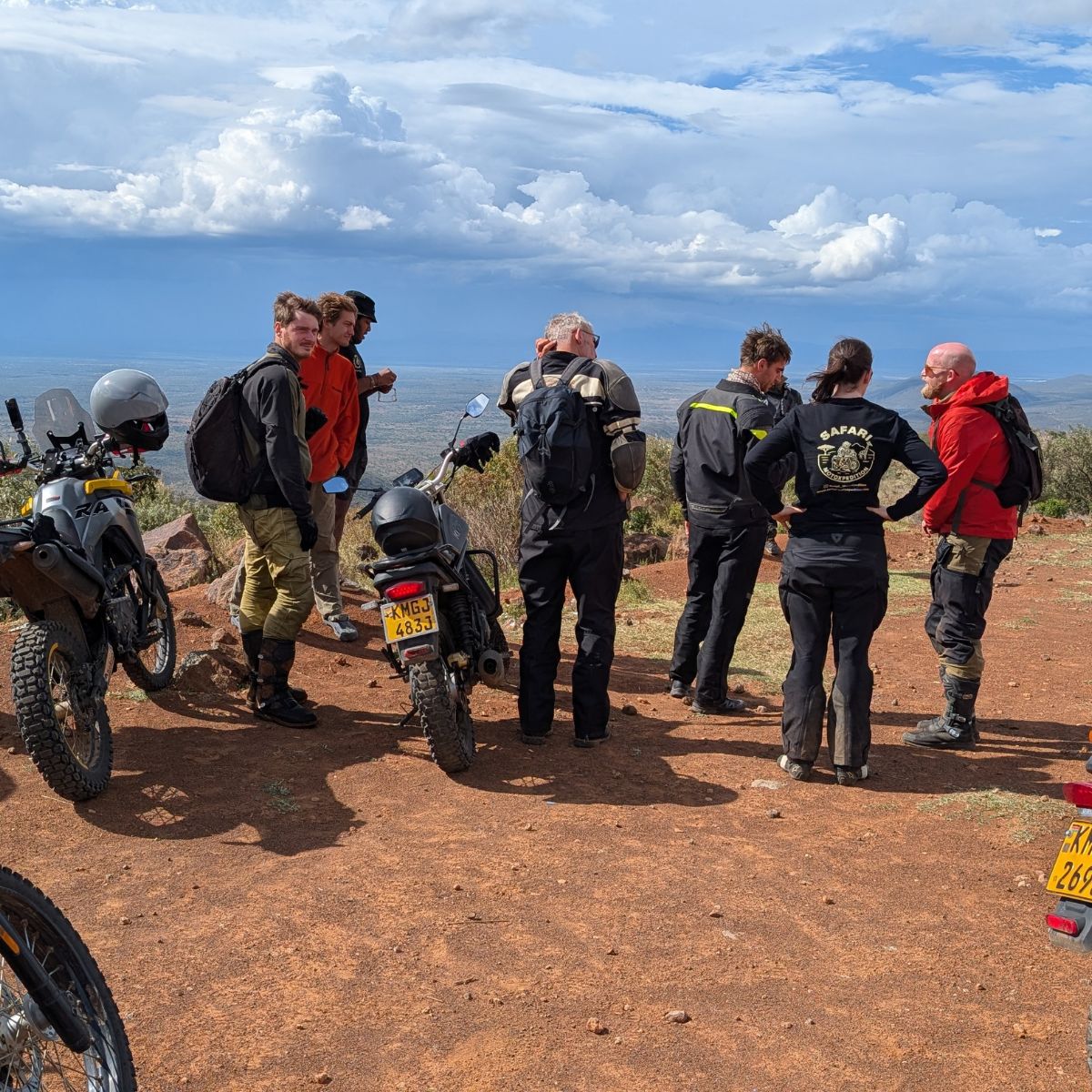
On a motorcycle safari in Kenya, first aid has two halves. One is your own small kit and medicines, which you pack and understand. The other is group-level medical cover on the trail, which should travel with the group, not in your pannier. On our expeditions a doctor and a mechanic ride with every group, so you can pack light, get your health paperwork right and focus on the riding.
This guide covers the half that is yours: what to carry, which vaccinations and malaria precautions to sort before you fly, and how to think about injuries far from a hospital.
Ride Kenya With Us in 2027
Max eight riders, about 80% off road, with a doctor, a mechanic and a support car along for the ride. 12 to 19 June 2027.
TL;DR
- Build a small personal kit around things you can use yourself: pain relief, rehydration salts, antihistamines, blister and wound care, and your regular medicines.
- Book a travel health appointment 4 to 6 weeks before departure at the latest. Hepatitis A, typhoid, yellow fever (for some areas) and malaria protection are the main topics.
- Carry medicines in original packaging with a doctor’s letter, and only pack what you are trained to use.
- Check your travel insurance covers off-road motorcycling and medical evacuation before you book flights.
- On a guided expedition with a doctor and support vehicle, your job is a sensible personal kit, not a field hospital.
Table of Contents
- What “first aid” means on a Kenyan motorcycle safari
- The golden rule: only pack what you can use
- Your personal medical kit for Kenya
- What a crash-scene kit adds, and why it belongs with the group
- Vaccinations and malaria: sort these before you fly
- Preparing for an injury far from help
- How a guided expedition takes the weight off
- A simple timeline before you ride
- FAQ
- Sources
What “first aid” means on a Kenyan motorcycle safari
Most searches for this topic turn up crash-scene kits designed for road riders. They are useful, but a safari is a different job. You ride murram roads (graded red dirt), cross dry riverbeds, deal with fesh fesh (fine, powdery dust), and spend several days far from a town of any size. Fuel. Water. Tools and spares. And medical help.
That gives you three layers to think about:
- Your personal kit. Small, in your own luggage, for blisters, upset stomachs, headaches, bites and minor cuts.
- The group’s medical cover. Trauma care, a proper vehicle, someone qualified to make decisions.
- Your paperwork and preparation. Vaccinations, malaria tablets, insurance, prescriptions.
Layer one and three are yours, whoever you travel with. Layer two is why every one of our trips has a doctor and a mechanic in the group, plus a support vehicle. Our doctor is Raj, our co-founder: a heart surgeon who worked in the UK for around 20 years and has been chief medical officer at WRC rallies. You are not carrying the responsibility for a serious incident on your own.
If you want the wider picture on risk, our article on whether it is safe to ride a motorbike in Kenya goes through it.
The golden rule: only pack what you can use
The best advice on motorcycle first-aid kits is also the simplest. An adventure riding first-aid guide says to bring only gear you know how to use. If you are not trained with a tourniquet, adrenaline or heavy painkillers, leave them at home. The same guide says riders heading somewhere remote, such as African deserts, should check with a specialised physician about medication and about what can legally cross borders.
It also suggests keeping the kit in a quick-access, waterproof spot and putting it in the same place every day. When something goes wrong, you do not want to be turning out a bag to find a plaster.
That is sensible for a safari rider. A wee kit you understand beats a big one you do not.
Your personal medical kit for Kenya
The UK’s National Travel Health Network and Centre (NaTHNaC), which is the NHS-linked travel health information service, says a first-aid kit should be tailored to the destination and the individual. Its list of things to consider is a good base for a Kenya trip:
- Paracetamol or ibuprofen
- Prescribed antibiotics, if your doctor or travel clinic recommends them
- Anti-fungal cream
- Antihistamines
- Antimalarials where recommended
- Anti-motion sickness tablets
- Loperamide and oral rehydration salts for diarrhoea
- Extra supplies of any regular medicines
For a rider you can add the practical items that deal with the usual day-to-day damage. The US Centers for Disease Control’s Kenya packing list suggests hydrocortisone cream, antibacterial and antifungal ointments, antiseptic wound cleanser, insect-bite treatment, bandages in several sizes, moleskin, compression wrap, disposable gloves, a digital thermometer, scissors, tweezers, eye drops and oral rehydration salts. It also lists water purification tablets, permethrin-treated clothing, a bed net and sunscreen of SPF 15 or higher.
That is a US source, so treat the antibiotic and other prescription suggestions as topics for your own GP or travel clinic, not as a shopping list.
A realistic rider’s list
For an eight-day trip, a pouch about the size of a paperback is enough:
- Plasters, blister dressings and moleskin (boots plus heat plus dust)
- Antiseptic wipes or wound cleanser
- Two or three sterile dressings and a roll of tape
- Paracetamol or ibuprofen
- Antihistamine tablets and bite or sting cream
- Oral rehydration salts and loperamide
- Eye drops (dust gets everywhere)
- Tweezers and small scissors
- Sunscreen and lip balm
- Hand sanitiser and a few disposable gloves
- Your regular medicines, plus spares
Keep the essentials in a waterproof bag in your jacket or daypack, in the same spot every day. Everything else can ride in the support car.
Carrying medicines: the paperwork
NaTHNaC’s advice here is specific and worth following to the letter:
- Carry regular medicines in hand luggage, with an extra supply in hold luggage.
- Keep them in original packaging.
- Bring a doctor’s letter that uses generic drug names, plus copies of your prescriptions, for border checks.
- Carry copies of your vaccine records and proof of travel insurance with the emergency contact number.
- Note any pre-existing conditions and allergies on a card, along with next-of-kin and accommodation details.
- Pack spare glasses or contact lenses.
The same factsheet discourages buying medicines overseas, because quality cannot be guaranteed, and advises against sharing medicines.
What a crash-scene kit adds, and why it belongs with the group
Road-riding first-aid pages focus on crash scenes. A crash scene management guide from Survive The Ride, an Australian rider-safety organisation, describes a kit built to help first-aiders carry out CPR, reduce shock, suppress bleeding and stabilise a broken limb. It includes gloves, a CPR mouth guard, dressings, bandages, a snake-bite bandage, antiseptic, blankets, shears and tweezers. It also gives one helmet rule worth knowing: remove a full-face helmet only if the rider is not breathing and the helmet has no flip-up chin piece.
The adventure riding guide above goes further, splitting kits into critical-trauma items (emergency dressing, tourniquet, trauma scissors that cut through riding kit, triangular bandage, pulse oximeter, rescue cover) and everyday items (painkillers, plasters, burn shields, a splint, thermometer).
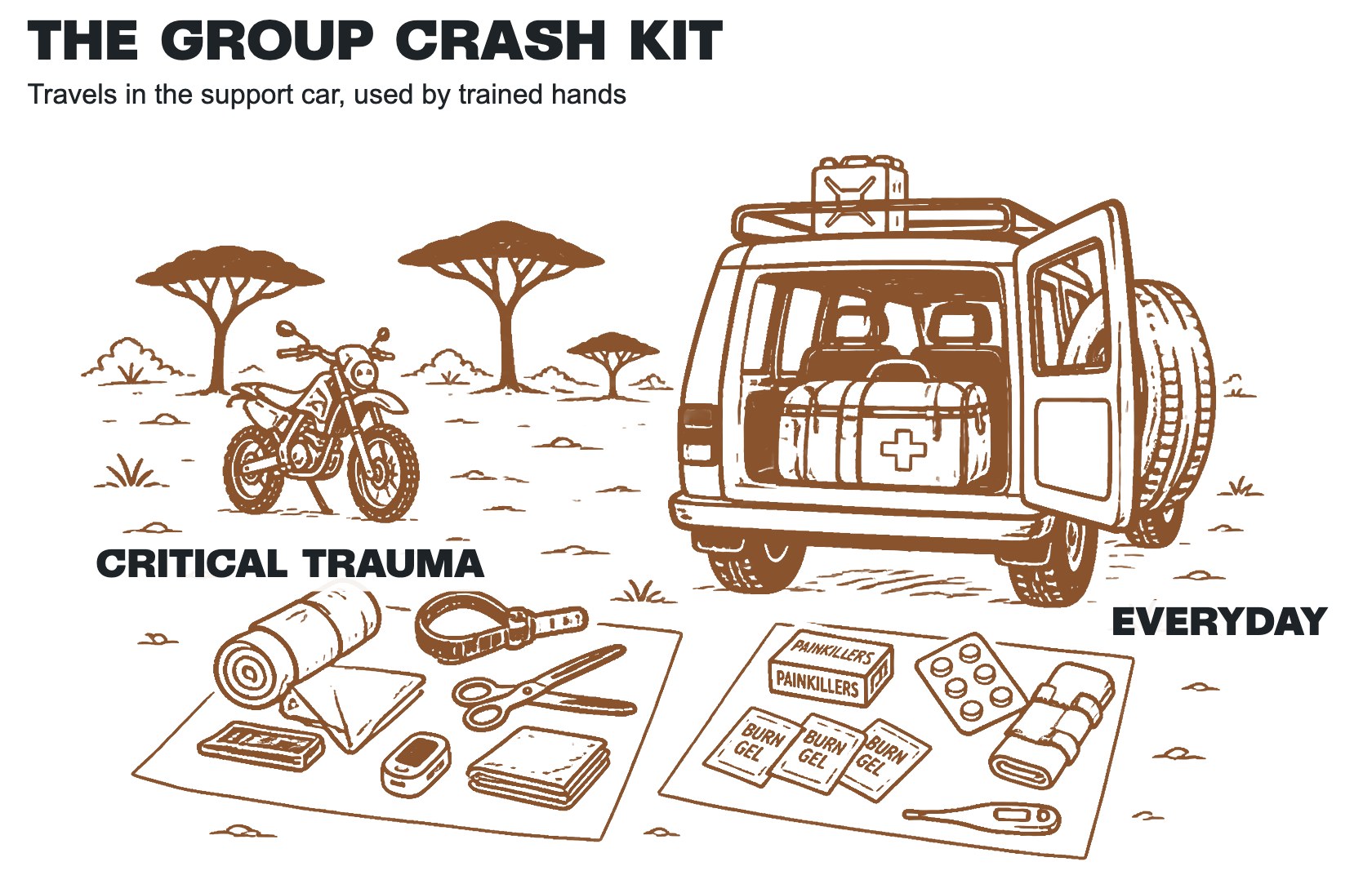
Here is the practical point for a safari rider. Those trauma items only help if the person using them is trained and the kit is with the group, not on one bike at the back. That is why our support car carries a professional medical kit from WRC rally sport, and why a doctor rides with every group. You should still know the basics (bleeding, airway, keeping a rider still), but you are not the plan.
Vaccinations and malaria: sort these before you fly
This is the part of motorcycle safari first aid that cannot be done on the trail. Start early. GOV.UK’s Kenya health guidance says to check the latest vaccine recommendations at least 8 weeks before your trip. NaTHNaC’s Kenya page says to arrange a travel health appointment at least 4 to 6 weeks before travel and to be up to date with routine UK vaccines, including MMR and diphtheria-tetanus-polio.
What NaTHNaC’s Kenya page recommends:
- Hepatitis A for travellers who have not been vaccinated before.
- Typhoid for most travellers.
- Yellow fever for travellers visiting specified risk areas, such as Tsavo, the Masai Mara and Lake Nakuru. A certificate is also required if you arrive from a country with yellow fever risk.
- Malaria protection in risk areas: usually a course of tablets your clinic prescribes, combined with simple bite prevention.
Which of these you need depends on your route, your age and your health history. Malaria sounds dramatic, but keep it in proportion. Risk in Nairobi is very low, the dry season we ride in sees far fewer mosquitoes, and repellent plus long sleeves at dusk do a lot of the work. Hidde lived in Kenya for years, still goes back several times a year and has never had it. If someone does catch it, it is treatable with medication and usually sorted quickly when caught early.
Bring your itinerary to your travel clinic and ask about the places you will sleep, not just the country. They will tell you whether tablets make sense for you. Our doctor on the trip is there for anything that comes up on the road, not as a replacement for that quick chat at home.
Rabies, tetanus and the rest
Routine tetanus cover matters more for riders than for most travellers, because of grazes in dirt. NaTHNaC notes the UK combined booster also includes diphtheria. Ask the clinic about rabies as well. Dogs and wildlife are around, and it is a question for the clinician, not a guess.
Insurance and entry rules
GOV.UK advises checking that your destination can provide the healthcare you may need, and that your travel insurance covers local treatment and unexpected medical evacuation. For a motorcycle trip, read the policy wording on motorcycling and off-road riding specifically, and confirm the cover applies to riding in Kenya. Kenya’s entry rules, including electronic travel authorisation and any health-insurance requirement for visitors, have changed in recent years. Check the entry requirements page of the GOV.UK Kenya travel advice before you book, not an old forum thread. Our guide to visas, licence, insurance and kit pulls the planning side together.
Preparing for an injury far from help
Remote riding changes the maths. A graze that is trivial at home needs proper cleaning when you have dust, sweat and a long day left. A stomach bug matters because you are hot, dehydrated and wearing a helmet.
Some habits that help:
- Treat small things early. Clean cuts, cover blisters, drink. Oral rehydration salts weigh almost nothing.
- Tell someone. On a group trip, mention it to the doctor or guide the moment a bite, fever or upset stomach starts, not at the end of the day.
- Ride within yourself. Most trail injuries happen when you are tired. Stop, eat, drink.
- Know your own medical history. Carry a card with allergies, conditions and medicines.
- Keep your kit consistent. Same bag, same spot, every day.
NaTHNaC also mentions a sterile medical kit (sterile needles, syringes, suturing equipment, IV sets and gloves) for areas where local medical equipment is a concern. It is packed in hold luggage and is meant for a local nurse or doctor to use, not for you. That is a decision to make with a travel clinic, and it shows how far personal kits go: they cover minor problems, and anything serious needs a qualified person.
Training worth having
You do not need to be a paramedic. But a first-aid course aimed at motorcyclists or remote outdoor settings is a good investment. UK courses cover basic life support, airway positioning, bleeding, monitoring vital signs and heat or cold illness. The Level 3 first aid for motorcyclists qualification is one example of the format. A day of practice makes everything in your kit make sense.
How a guided expedition takes the weight off
Here is where the choice of trip matters. If you ride self-drive, planning the medical side falls on you: routes, evacuation, who treats what. On a guided expedition that is built in.
Our 2027 Safari Loop is a small group trip with a maximum of eight riders, about 80% off road, with a doctor, a mechanic and a support vehicle with the group, plus airport transfers and full board. It costs €2,785 per rider. A single room supplement is €295, a bike upgrade is €275, and an extra night at Doc’s Eco Camp is €50 per person. Routes run through private conservancies and back country that standard tourist routes miss, which is exactly why having a doctor on the ground matters.
Fancy Riding It Yourself?
Tell us who is coming and what you would like. We will take it from there.
You can see the dates and details on the 2027 tours page or start from the Safari MotoXpedition home page. If you have specific requirements, custom trips are available by enquiry. For more on what you will be riding, see our terrain guide for off-road riding in Kenya.
A simple timeline before you ride
| When | What to do |
|---|---|
| 8+ weeks before | Check GOV.UK and NaTHNaC for Kenya; book your travel health appointment; check your insurance wording |
| 4 to 6 weeks before | Have vaccinations and agree malaria tablets with your clinic; ask for a doctor’s letter for medicines |
| 2 weeks before | Pack your personal kit; copy prescriptions, vaccine records and insurance details |
| Packing | Regular medicines in hand luggage plus a spare supply in the hold; kit in a waterproof bag |
| On the trip | Tell the doctor early about any bite, fever or stomach trouble; drink, eat, stop when tired |
FAQ
What should be in a motorcycle first aid kit for Kenya?
Keep it small and personal: plasters and blister dressings, antiseptic, sterile dressings, paracetamol or ibuprofen, antihistamines, oral rehydration salts, loperamide, eye drops, tweezers and your regular medicines. Only pack items you know how to use. Your GP or a travel clinic can advise on anything prescription-only.
Which vaccinations do I need for a motorcycle safari in Kenya?
NaTHNaC recommends hepatitis A for people not already vaccinated and typhoid for most travellers. Yellow fever is recommended for visits to areas including Tsavo, the Masai Mara and Lake Nakuru. Malaria protection is advised in risk areas. Book a travel health appointment 4 to 6 weeks ahead, and earlier if you can.
Do I need malaria tablets?
Ask a GP or travel clinic. Risk depends on where you sleep and ride: very low in Nairobi and the highlands, higher on the coast and in the west. Most visitors take a course of tablets alongside repellent and long sleeves at dusk. If someone does catch malaria, it is treatable with medication, and with a doctor in the group it gets picked up early.
Can I take my own medication into Kenya?
Yes, if you carry it properly. Keep it in original packaging, put regular medicines in hand luggage with a spare supply in the hold, and bring a doctor’s letter using generic drug names plus prescription copies. Check with your doctor before taking any controlled or strong painkillers abroad.
Is a first aid course worth it before a motorcycle trip?
Yes. A course aimed at motorcyclists or remote outdoor settings teaches airway positioning, bleeding control and how to manage a scene. It makes your kit useful and helps you support the group’s doctor if something happens.
Sources
- NaTHNaC: First aid kits
- NaTHNaC: Kenya
- GOV.UK: Health, Kenya travel advice
- CDC: Kenya packing list
- Adventure Motorcycle: How to prepare a motorcycling first aid kit
- Survive The Ride: Crash scene management
- Colchester Travel Clinic: Kenya travel vaccines
- AMG Ambulance: First aid training