Sun protection on a motorcycle means keeping your skin covered, your gear ventilated and your body cool, all at once. You don’t swap protection for comfort. You choose gear that does both, cover every patch of exposed skin, and know the signs of heat illness before they arrive. That matters most on a long off-road trip somewhere hot. On our Kenya expeditions a doctor and a mechanic ride with the group, but the habits below are still yours to bring.
Ride Kenya With Us in 2027
Max eight riders, about 80% off road, with a doctor, a mechanic and a support car along for the ride. 12 to 19 June 2027.
TL;DR
- Keep protective gear on in the heat, but make it light: vented jacket or motocross gear, mesh panels and a wicking base layer. Leave the heavy leathers at home.
- Cover the skin the gear does not: face, neck and the gap at the wrists. Use sunscreen of at least SPF 30 with 4 or 5 star UVA protection and re apply often.
- Pick summer gloves with a CE rating to EN 13594:2015 and real ventilation, not just short cuffs.
- Know the signs of heat exhaustion and heatstroke. Heatstroke is a medical emergency.
- Ride in the cooler hours, stop in the shade and drink little and often.
Table of Contents
- Why the sun hits riders harder
- Protect your skin first
- What to wear: protective, vented and light
- Gloves for hot weather and adventure riding
- Recognise heat illness early
- Don’t forget the bike
- Riding Kenya with a group that carries the safety net
- FAQ
- Sources
Why the sun hits riders harder
On a bike you are outside for hours, with no roof, no windscreen glass and a steady breeze that hides how hot you are getting. The wind cools your sweat so quickly that you feel fine while your skin burns and your body loses water.
Near the equator the sun is a different beast. Even on a cloudy morning in Kenya the UV is strong enough to burn, and at altitude it is stronger still. If a grey day back home can catch you out, a full day on a red dirt track under an equatorial sun asks much more of your kit and your routine.
The UK Health Security Agency also lists people who are physically active and spend a lot of time outside, such as runners, cyclists and walkers, among those at higher risk of becoming seriously unwell in hot weather. An off-road rider, standing on the pegs and wrestling a heavy bike through sand, fits that description well.
Protect your skin first
Helmet, jacket and trousers do most of the work. Your skin is exposed in a few places: the face under the visor line, the neck, the backs of the hands and any gap between glove and sleeve. Those are the spots that burn.
The GOV.UK Beat the heat guidance gives the basics:
- Apply sunscreen generously, SPF 30 or higher, with 4 or 5 star UVA protection.
- Re-apply frequently.
- Stay in the shade between 11am and 3pm, when UV levels are highest.
- Wear wraparound sunglasses and a wide-brimmed hat when you’re off the bike.
A rider can’t wear a wide-brimmed hat under a helmet, so the routine matters more. Here is how it works in practice.
- Sunscreen goes on before you dress. Do it at breakfast, not at the bike. Cover face, ears, neck, and the back of the neck where the helmet rim sits.
- Re-apply at every stop. A fuel stop or a shade break is the cue. Sweat and wind strip sunscreen quickly.
- Cover the neck. A neck tube or buff keeps sun off the skin. Michelin’s heatwave riding guide adds a useful trick: the carotid artery sits in the neck just below the ears and is exposed to the wind, so a neck gaiter soaked in water and worn high cools the skin and the blood there as the moisture evaporates.
- Choose a tinted visor or sunglasses that fit under the helmet. Motorcycle News lists tinted sun visors among its top hot-weather actions. Squinting into low sun on a rutted track tires you and slows your reactions.
- Keep sleeves down. Light, long sleeves under a vented jacket protect your forearms from the sun when you open the jacket up.
What to wear: protective, vented and light
The instinct on a hot day is to strip off. Do not. No shorts and T shirt, however hot it gets. On gravel and murram roads (the graded red earth roads common in East Africa) a fall at modest speed takes skin off fast, and bare skin also takes the sun. But protective does not have to mean heavy. We have had riders turn up in Kenya with full leather suits and thick touring jackets, and they were drenched in sweat before we had even left camp. Light, breathable gear is the answer.
Visordown makes the case that staying cool and staying protected are not a trade-off. Good gear is built to manage airflow and moisture, so the answer is the right gear with its vents open, not less gear.
The layers that work
- Base layer. Choose a summer base layer that wicks moisture away from the skin. Motorcycle News says this gives a cooling effect. Michelin recommends perspiration-absorbent underwear too.
- Jacket and trousers. Light colours, mesh panels and zipped vents. Visordown says to open the vents on jacket, trousers and helmet when conditions allow, because airflow while moving makes a big difference compared with sitting in still air.
- Helmet. Vented, with the vents open. Close them in dust.
- Riding jeans. Motorcycle News notes jeans feel cooler than leathers but offer less protection. Off-road, where you’ll fall more often, a vented jacket and proper trousers are the better call.
Where vented gear stops being enough
Michelin says vented garments are generally sufficient up to 30 to 35°C. Above 35°C you need extra precautions against dehydration, heatstroke and heat exhaustion. That means earlier starts, longer shade stops and a closer watch on how you and your riding partners feel.
Gloves for hot weather and adventure riding
Hands take the sun on the throttle side for hours, and they’re the first thing you put down in a fall. A good summer glove has to vent and protect.
What to look for
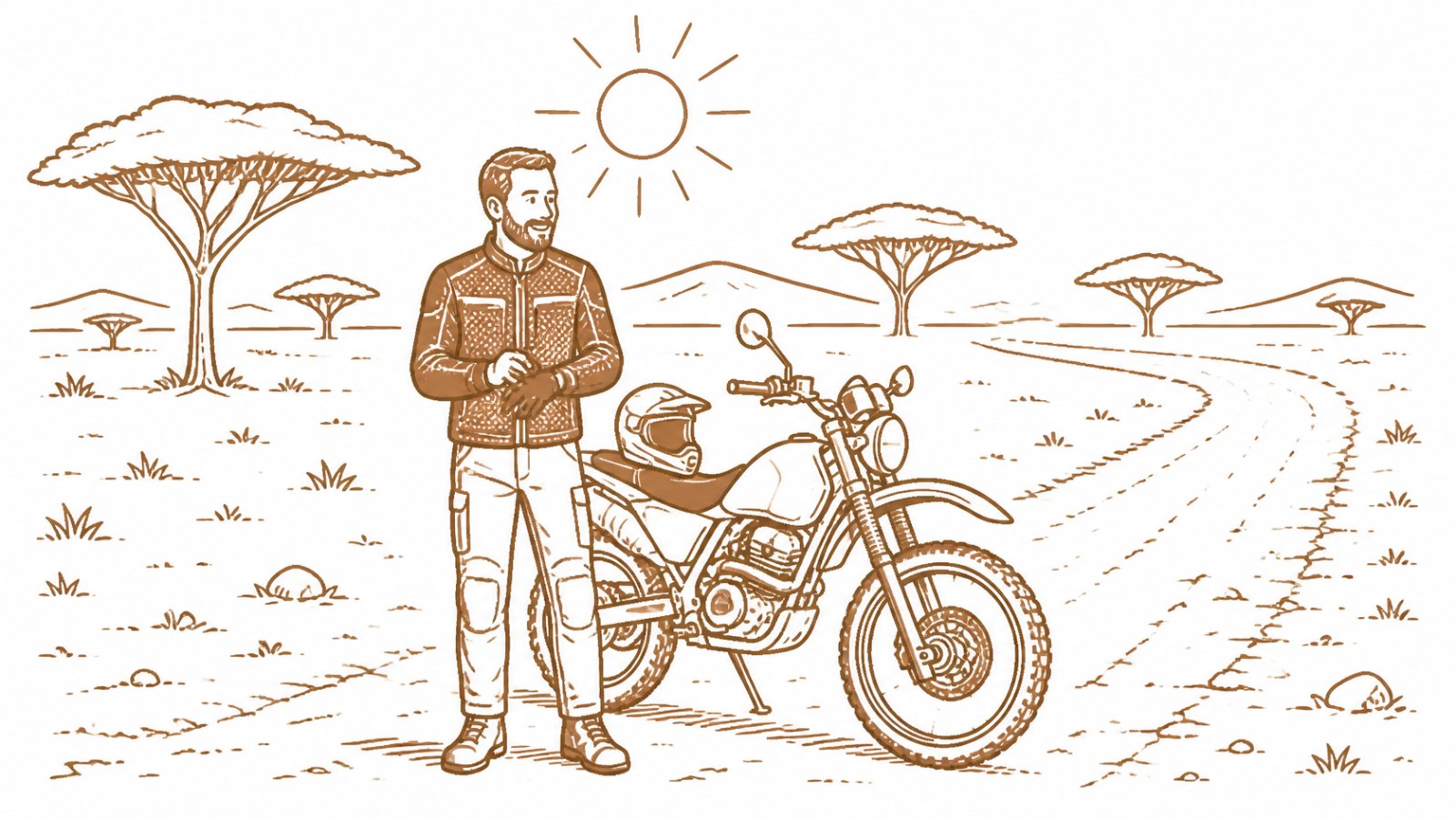
Motorcycle News’ glove guide says to look for a CE rating to EN 13594:2015, Level 1 or Level 2, with KP meaning the knuckle protection has been tested. Then check ventilation, such as perforated leather.
A short checklist:
- CE marking to EN 13594:2015, with KP.
- Perforated leather or mesh on the backs and fingers.
- A hard or floating knuckle guard and a reinforced palm.
- A cuff that closes cleanly under your jacket sleeve, so no skin shows.
- Touchscreen fingertips if you use a phone for navigation.
A few gloves reviewers rate
Motorcycle News’ guide picks the Held Air N Dry, with CE Level 1 KP and a twin-chamber design: a ventilated, unlined chamber for hot dry riding and a waterproof one for wet. It also picks the Five RS1, whose scooped knuckle protector channels cooling air onto the backs of the hands.
In a separate summer gear test, Motorcycle News found that perforations on the Goldtop Predator kept hands cool even at 32 degrees, with floating knuckle armour and CE certification.
The kit editor makes a fair point in that test: the ventilation and protection balance in summer gloves can give you great feel for the controls, while some riders prefer more armour over tactility. For off-road riding, lean towards armour. You’ll be on the pegs, working the clutch and brake constantly, so choose a glove that fits closely and doesn’t bunch.
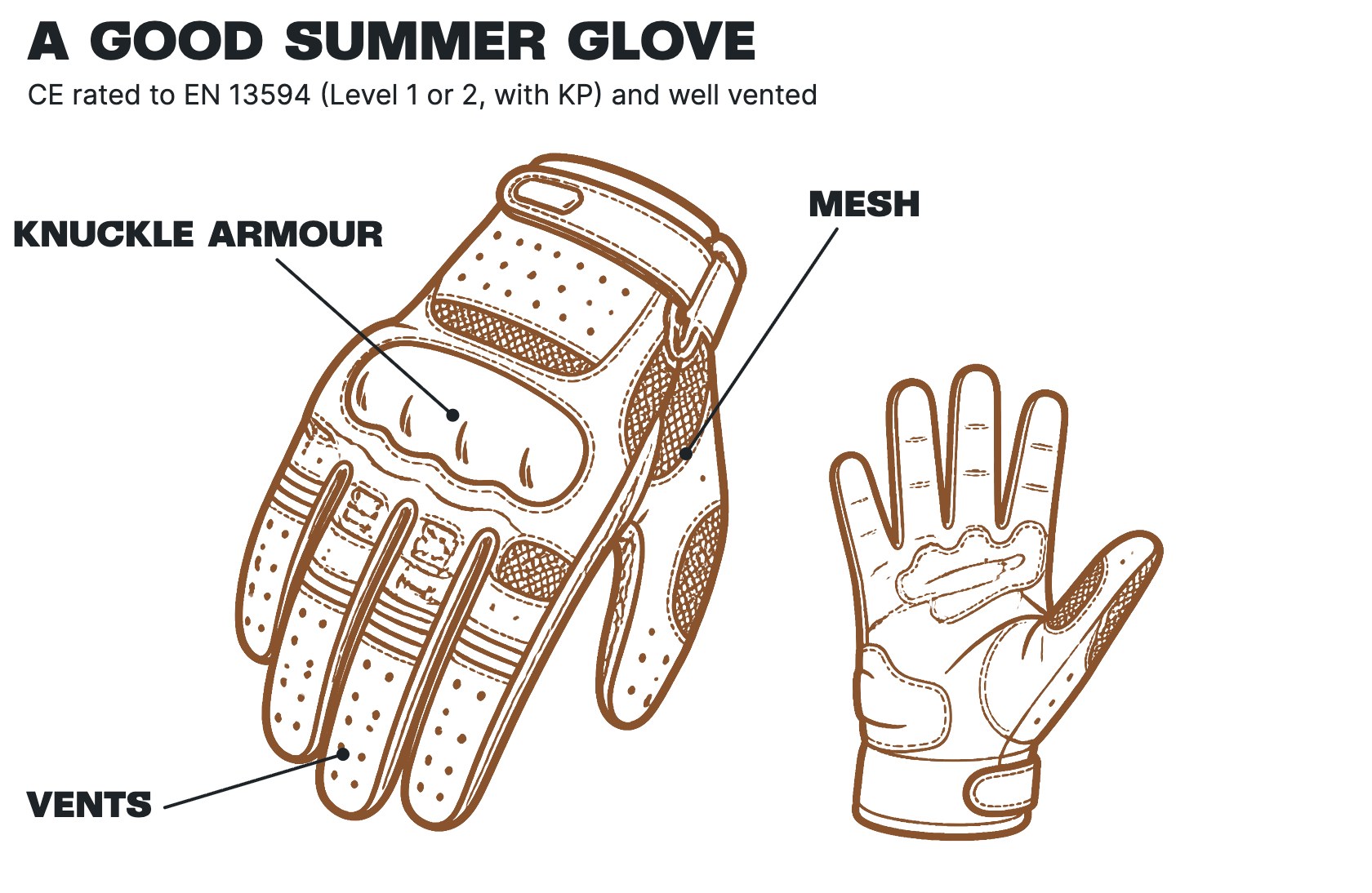
What do we wear ourselves? Hidde rides in motocross gear: body armour, light trousers, knee and shin protectors, high boots and an enduro helmet with a peak. Raj wears a regular motorbike jacket and trousers with the same boots. Both choose breathable over bulletproof, and both bring a rain jacket, because Kenya can still throw a downpour at you. Anything you take off during the day can ride along in the support car.
Recognise heat illness early
Sun protection is not only about skin. Heat does more damage than a burn. London City Hall’s hot-weather page sets out the signs.
Heat exhaustion shows up as tiredness, weakness, feeling faint, headache, muscle cramps, nausea, heavy sweating and intense thirst. It usually doesn’t need emergency attention if you cool down within 30 minutes.
To cool down:
- Move somewhere cool or shaded.
- Take off unnecessary clothing.
- Drink cool water or a rehydration drink.
- Apply cool water by spray or sponge, with cold packs under the armpits or on the neck.
If symptoms are getting worse, get medical help. On our trips, that means telling the doctor in the group straight away.
Heatstroke is different. The signs are confusion, lack of co ordination, a fast heartbeat, fast breathing, hot skin that is not sweating, and seizures. It is a medical emergency. Call for help and cool the person down while you wait. In Kenya the emergency numbers are 999 or 112.
Motorcycle News warns that dehydration affects concentration, and that a headache can be the first sign of something more serious. On a bike, a drop in concentration is how a hot day turns into a crash.
Habits that keep the heat down
- Ride in the cool hours. Michelin recommends early mornings and evenings.
- Stop often, in the shade. Drink water that isn’t ice cold.
- Skip alcohol. It speeds up dehydration.
- Check each other. Quiet, clumsy or suddenly not sweating? Stop the group.
Don’t forget the bike
Heat is hard on the machine too. Before you set off in hot weather, Motorcycle News advises checking tyre pressures, tread, oil, brake and clutch fluid, and coolant. Park in the shade where you can, which protects the seat, plastics, paint and hoses.
Fuel. Water. Tools and spares. On a remote trail, that’s the list that keeps a hot day from becoming a long one.
Riding Kenya with a group that carries the safety net
If you are planning to ride somewhere properly hot, the question is less about the gear list and more about what happens when something goes wrong 100 km from a town. On our 8 day 2027 Safari Loop in Kenya, riding is about 80% off road, in groups of a maximum of eight riders. A doctor and a mechanic travel with you, with a support vehicle, so a rider who is flagging from the heat or a bike that is overheating gets looked at on the spot. Days start early, we stop in the shade, and the evenings around Lake Naivasha cool down enough that you will be glad of a fleece. Hot days, cool nights, cold drinks. Cannae complain.
Fancy Riding It Yourself?
Tell us who is coming and what you would like. We will take it from there.
The Safari Loop costs €2,785 per rider, with full board accommodation and airport transfers included. A single room supplement is €295, a bike upgrade is €275, and an extra night at Doc’s Eco Camp is €50 per person. For a trip with a different pace or route, we also build custom itineraries. See all 2027 tours or read our guide to the best time for a motorbike tour in Kenya to choose your season.
For kit, visas and insurance, the Kenya trip planning guide covers it, and our bikes and equipment page shows what you ride.
FAQ
What is the best sun protection for riding a motorbike?
Full coverage first, sunscreen second. Wear a vented jacket, trousers and gloves, then apply SPF 30 or higher with 4 or 5 star UVA protection to face, ears and neck, as GOV.UK advises. Re-apply at every stop.
Is it safe to ride in just a T-shirt when it’s very hot?
No. The rule is all gear, all the time. Vented, light-coloured gear with a wicking base layer keeps you cooler than bare skin in the wind, and it protects you from the sun and from a fall.
How do I cool down quickly on a hot ride?
Stop in the shade, open or remove unnecessary clothing, drink cool water, and apply cool water to the skin with cold packs on the neck or under the armpits. London City Hall says heat exhaustion should improve within 30 minutes. If you feel confused or stop sweating while your skin is hot, that is heatstroke: call the emergency services.
What should I look for in hot-weather adventure gloves?
A CE rating to EN 13594:2015 with KP knuckle protection, perforated leather or mesh for airflow, a reinforced palm and a cuff that closes under your sleeve. Choose a close fit for off-road control.
Do I need sun protection if the weather is cloudy?
Yes. Near the equator, UV is strong enough to burn even on a cloudy day, so keep the routine going whatever the sky looks like.
Sources
- Beat the heat: staying safe in hot weather, GOV.UK
- Heat summary: supporting vulnerable people, GOV.UK
- Coping with hot weather in London, London City Hall
- Riding your bike in heatwaves, Michelin
- Tips for riding a motorcycle in hot weather or a heatwave, Motorcycle News
- The best ways to stay cool on a motorcycle this summer, Visordown
- The best summer and winter motorcycle gloves for you in 2026, Motorcycle News
- Best Summer Motorcycle Gear tried and tested, Motorcycle News