
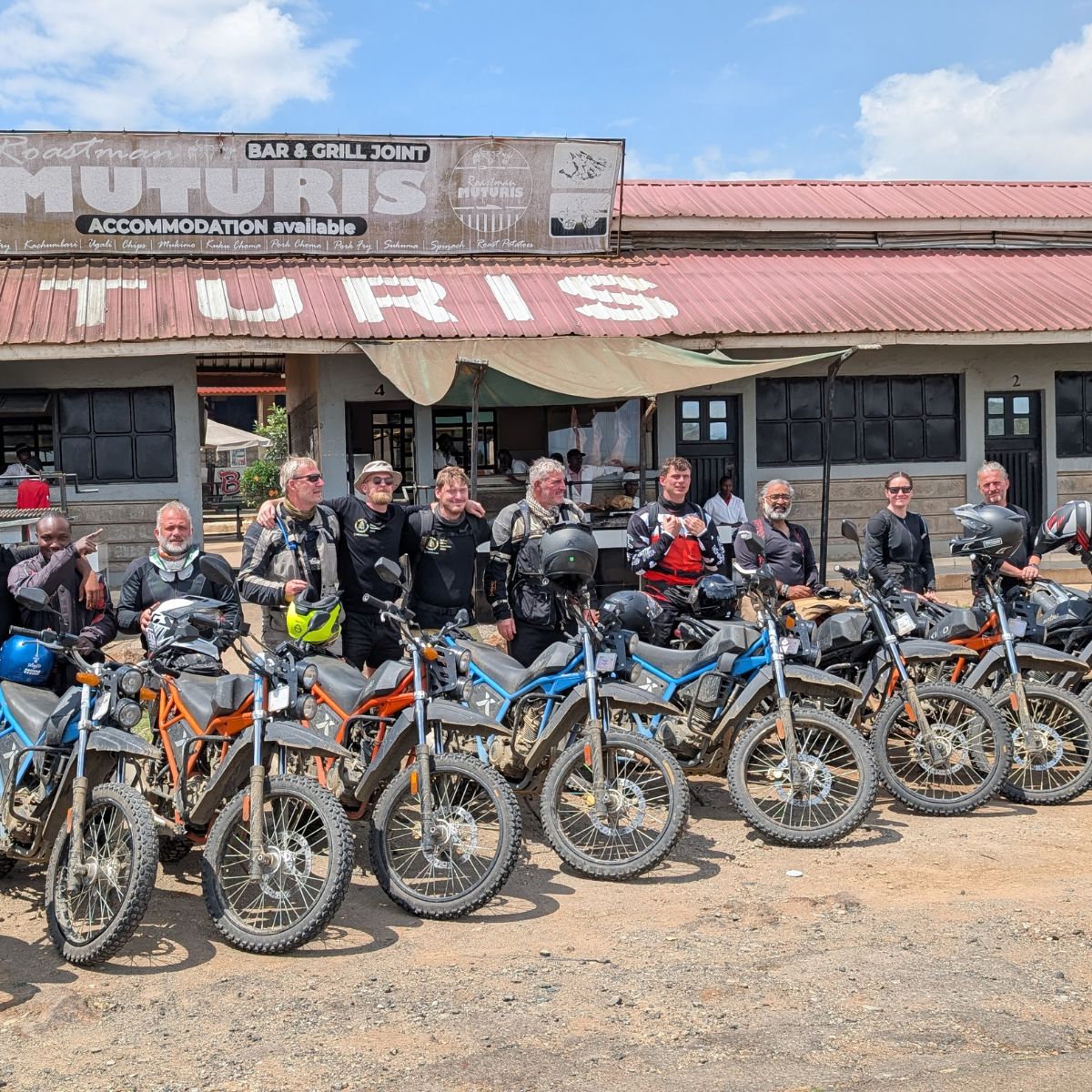
Motorcycle seat discomfort is almost always a pressure problem, not a toughness problem. The seat concentrates your weight on a small area, blood flow drops, and you start shifting around. The fix is to spread the load (the right seat shape, a pad if needed), set the bike up for your body, and break up the day. If you want to ride long days in comfort, a small-group guided expedition takes the logistics out of the equation, so your only job is to ride. Below you will find the causes, the fixes, the helmet and back questions riders ask, and how we handle comfort on our own trips in Kenya.
Ride Kenya With Us in 2027
Max eight riders, about 80% off road, with a doctor, a mechanic and a support car along for the ride. 12 to 19 June 2027.
TL;DR
- Discomfort comes from pressure points and restricted blood flow, not from “going soft”. Comfort is support and even load, not squashy foam.
- Numb sit bones point to a seat that concentrates load. Lower back ache usually points to a seat pitched forward or a saddle that does not support the pelvis.
- Stop every 60 to 90 minutes, keep your elbows slightly bent and your grip relaxed, and check your helmet fits properly.
- Back pain that comes with numbness in both legs, weakness or bladder trouble needs urgent medical advice.
- On our guided Kenya expeditions you ride the Kibo 250, a light bike with a relaxed, upright seating position, and we stop often for drinks, snacks and the view. A doctor, a mechanic and a support vehicle travel with the group.
Table of Contents
- Why a motorcycle seat becomes uncomfortable
- Is it the seat, your posture or something else?
- How to make a motorcycle seat more comfortable
- Back pain, vibration and the rest of the bike
- Make your helmet more comfortable
- Long rides: breaks, hydration and pacing
- Where comfort meets terrain: why Kenya riding is different
- Ready to ride somewhere worth the effort?
- A quick comfort checklist before any long ride
- FAQ
- Sources
Why a motorcycle seat becomes uncomfortable
Sit on anything hard for long enough and it hurts. A motorcycle seat adds a twist: you are not sitting naturally. An unnatural sitting position creates pressure points and restricts blood flow, and those hot spots can start to sweat. That is the burn you feel after an hour or two.
Most riders assume the answer is a softer seat. It usually is not. A seat maker’s technical lead puts it well: comfort is about how well the seat supports the pelvis, spreads sit-bone load evenly and keeps the spine neutral, without forcing you to keep shifting. Soft foam that compresses unevenly lets you sink onto your sit bones, which is exactly what you were trying to avoid.
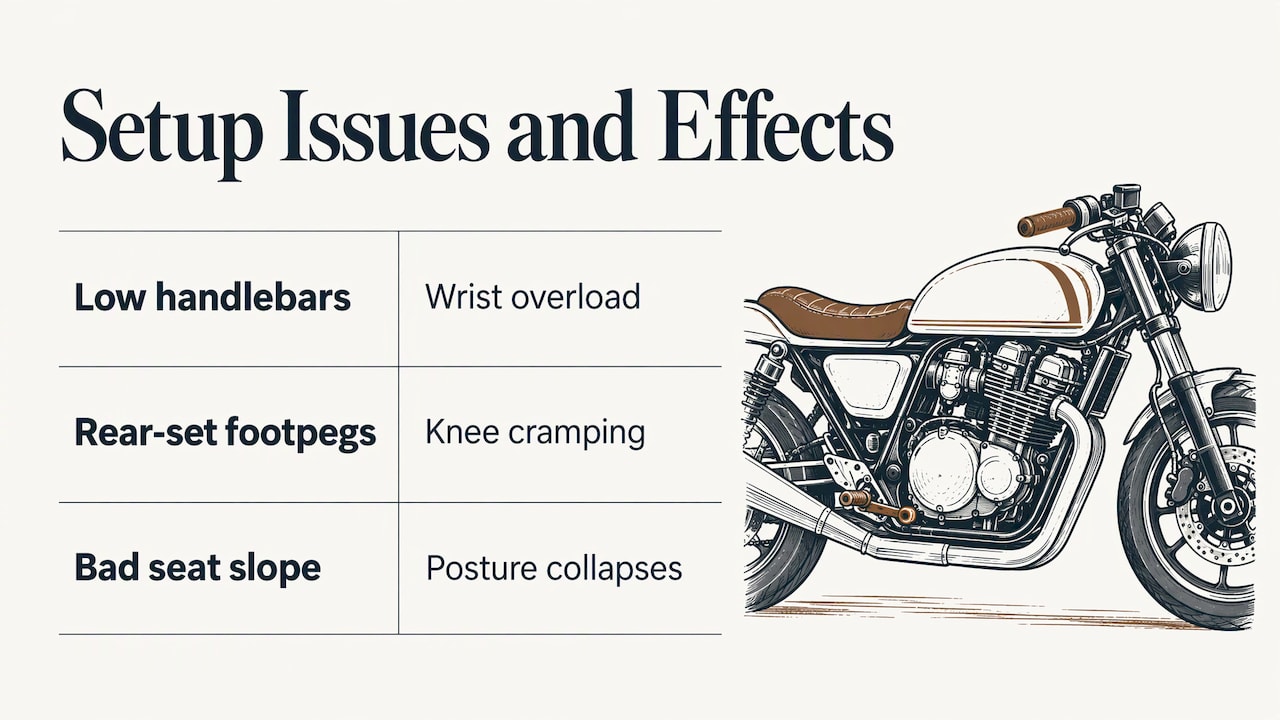
The seat is also not working alone. Handlebars set too low overload the wrists, footpegs too far back can cramp the knees, and a badly sloped seat lets your posture collapse over time. Small comfort issues rarely need the whole bike rebuilt.
Is it the seat, your posture or something else?
Before you spend money, work out what is actually going on. Run through these questions on your next ride:
- Does the seat hold you neutral, or push you forward onto your wrists?
- Are your sit bones supported, or are you riding on foam that squashes unevenly?
- Can your thighs rest against the tank?
- Is there a slight natural bend at your elbows?
- Are you shifting position more than once every 30 minutes?
More than one or two “yes” answers points to a contact-point problem rather than a fitness problem. The same source links symptoms to causes. Lower back ache usually means a forward-pitched seat or a saddle that is not supporting the pelvis. Numb sit bones mean the seat is concentrating load instead of distributing it.
Tailbone pain on a small-capacity bike with a flat, thin seat? That is the classic case of the pelvis rolling back with no support. Burning soreness within a short ride on a narrow seat? Pressure is landing directly under the bones. Different symptom, different fix.
How to make a motorcycle seat more comfortable
Start with the cheapest, most reversible changes and work up.
Seat pads and covers
Seat pads come in several types: air pockets, gel, sheepskin or memory foam, with mesh versions that let air through. Each does something different:
- Air cushions redistribute weight away from pressure points.
- Gel takes the edge off a hard seat.
- Sheepskin is popular for keeping you cooler in heat and warmer in the cold.
- Memory foam moulds to you, but check it does not bottom out on a long day.
Two things to consider before you stick anything on. Added height can affect how far your feet reach the ground, which matters on a tall bike. And thick insulation can reduce your feel and connection to the bike. On rough ground, that connection is how you read the bike.
Reshaping or replacing the seat
If the shape itself is wrong, padding on top only hides it. Look for a seat that is wide enough to spread load, with a flat, supportive area for your sit bones and no forward slope that slides you into the tank. Foam density matters more than thickness: firm, supportive foam beats a thick, soft layer. Anything involving cutting or rebuilding the seat is best left to someone who does it properly, because a bad rebuild is worse than the one you started with.
Riding gear
Padded shorts and base layers help with chafing and sweat. They do not fix a bad seat shape, but they reduce friction, which is often the part that turns discomfort into pain.
Sit differently
Shift your hips and move your feet now and then to avoid constant pressure on the same spot. Use your core to hold your posture instead of hanging off the bars, and keep your elbows slightly bent. Moving feet and hips occasionally reduces pressure points, and a relaxed grip lets your arms soak up the road.
Back pain, vibration and the rest of the bike
Seat pain and back pain often arrive together. Vibration plays a part too. Engines transmit buzz through the frame to the bars, seat and pegs. Fewer cylinders (singles and V-twins) tend to give lower-frequency vibrations, more cylinders give higher-frequency ones, and bar-end weights, gel grips or rubber mounts can take the edge off. Riders also react differently to different frequencies, so you may not know how a bike feels to you until you have spent real time on it. Varying your revs to avoid the worst range helps.
Wind matters as well. Turbulent air hitting the helmet causes buffeting, which leads to neck fatigue, tension headaches and reduced concentration. Adjusting the screen to find cleaner air can make a bigger difference than any cushion.
When your back hurts
For ordinary aches after a ride, the advice from health bodies is consistent: keep moving. Back pain is rarely due to serious disease or damage, and staying active is better than rest, while prolonged rest can mean more pain and poorer recovery. Gentle movement, a heat pack and suitable pain relief may help. The physiotherapy profession’s guidance is the same: stay as active as you can and return to usual activities gradually.
See a doctor urgently if you get new numbness or tingling in both legs, leg weakness, trouble urinating, or loss of bladder or bowel control. Also get advice if the pain gets worse or does not start to improve within a few weeks.
Make your helmet more comfortable
A helmet that squeezes or shifts ruins a ride as surely as a bad seat. Fit comes first. According to the government’s SHARP safety scheme, a helmet should fit firmly with no pressure points or red marks, should not rotate or slip when you test it, and its chin strap should be secure enough that two fingers fit between strap and jaw. It also says to look at a helmet’s safety rating only among helmets that fit you properly.
Practical points:
- Pressure on the forehead or cheeks usually means the shell or liner shape does not match your head. Try a different size or a different head shape range rather than forcing it.
- Noise and neck ache often come from turbulence, not the helmet itself. Move the screen, or your head position, before you blame the lid.
- Do not modify the shell or strip padding to gain comfort. You lose protection.
- Try before you buy where you can. Some manufacturers now build interiors from scans of many real heads, which can make a helmet comfortable straight out of the box.
Long rides: breaks, hydration and pacing
The best comfort upgrade costs nothing: stop. Guidance varies a little by source, which tells you it is a personal rhythm:
- Stop every 60 to 90 minutes to stretch, drink and get the blood flowing again.
- In the heat, stop roughly every hour. A five or ten minute break in the shade beats pushing on until you are cooked.
- Dehydration creeps up on you and slows your reactions long before you feel thirsty, so drink at every stop.
At each stop: get off, walk, drop your shoulders, roll your neck, swing your arms and do a few lunges. Neutral wrists and a looser grip cut hand and arm fatigue. Drink water. Eat something.
Luggage counts too. Heavy kit sitting high or far back changes how the bike loads you. On our trips that problem disappears: your bags ride in the support car, so the bike stays light and you only carry what you need for the day.
Where comfort meets terrain: why Kenya riding is different
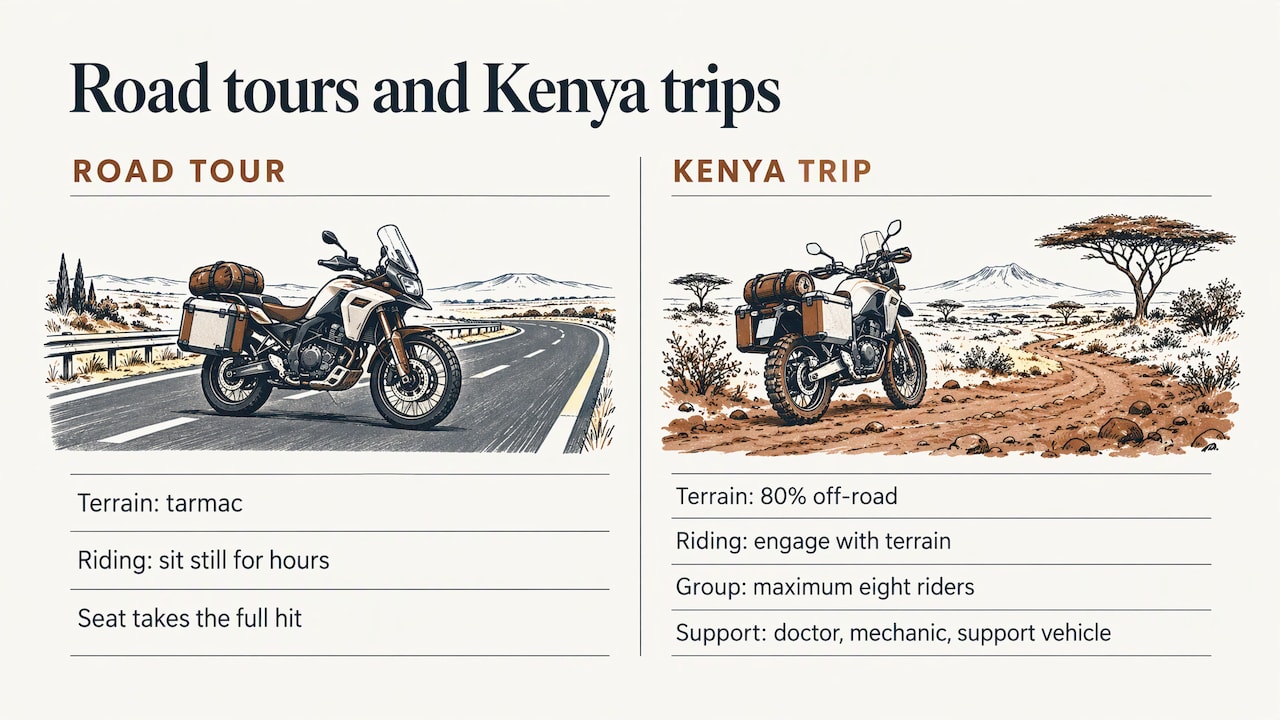
Here is the real difference between a road tour and an expedition. On tarmac, you sit still for hours and the seat takes the full hit. On our Kenya trips, riding is about 80% off road: murram, red dirt, sand, rocky tracks, potholes and the odd giraffe beside the trail. You spend a good part of the day standing on the pegs, which takes the weight off your backside and puts your legs to work. A very different relationship with the bike, and a far kinder one for your sit bones.
The Kibo: comfy by design
Then there is the bike itself. Our standard bike is the Kibo K250, designed in the Netherlands and built in Kenya for exactly these roads. It is light, forgiving and properly comfortable, with an upright, relaxed seating position that keeps your back straight and your wrists happy. No folding yourself over a tank, no wrestling the bars.
And we stop plenty. Regular breaks to stretch your legs, have a drink or a snack, and simply take in the view. Nobody is chasing a timetable, so your backside gets a rest long before it starts complaining.
It also changes what comfort means. You are not nursing a bike you picked up on the way. Our expeditions are planned by Raj and Hidde, who know these tracks inside out, with a maximum of eight riders per group, so the pace is set by riders, not by a coach timetable.
And when something does go wrong, whether a sore back or a loose bolt, the support is already with you. Every trip includes a doctor and a mechanic, plus a support vehicle. You do not have to find a boda boda mechanic at the roadside or work out what to do about a twinge in the middle of nowhere. That frees your attention for the riding.
What comfort looks like on our trips
Here is what is included on the 2027 Safari Loop, from €2,785 per rider:
- Full board accommodation
- Airport transfers
- A mechanic, a doctor and a support vehicle
- Exclusive access to private conservancies and remote trails
If you want more room to recover at the end of the day, a single room supplement is €295. If you want a different bike, there is a bike upgrade at €275. An extra night at Doc’s Eco Camp is €50 per person. You will find the bike options and kit on our bikes and equipment page, and what to bring, including licence, insurance and kit, in our Kenya motorcycle trip planning guide.
Ready to ride somewhere worth the effort?
If you are reading about seat discomfort because you are planning a big trip, the best question is not which pad to buy. It is where you want to spend those hours in the saddle, and who is looking after the details. Our small groups ride Kenya with a doctor and mechanic alongside and the logistics handled. A sore bum is a wee price for a sunset over the Rift Valley. Have a look at the 2027 Safari Loop, or see all 2027 tours, including the India Special Edition at €3,450 per rider.
Fancy Riding It Yourself?
Tell us who is coming and what you would like. We will take it from there.
Want something tailored? Custom trips are available on enquiry, and you can start on our Plan Your Ride page.
A quick comfort checklist before any long ride
Fuel. Water. Tools and spares. Then your body:
- Check your seat: is it supporting your sit bones or letting them sink?
- Check your reach: slight bend in the elbows, relaxed shoulders, thighs able to touch the tank.
- Check your helmet: firm, no hot spots, strap fitted with two fingers’ gap.
- Plan your stops: every 60 to 90 minutes, longer in the heat.
- Pack light: heavy luggage changes how the bike carries you.
- Carry water and drink it. Pole pole wins the day.
FAQ
Why does my bum go numb on a motorcycle?
Numb sit bones usually mean the seat is concentrating your weight in one spot instead of spreading it, which restricts blood flow. Shifting your position, stopping every 60 to 90 minutes and choosing a seat or pad that distributes load evenly all help. If the numbness is in both legs and arrives with weakness or bladder trouble, get urgent medical advice.
Do gel or sheepskin pads really help?
They can. Air, gel, sheepskin and memory foam pads each suit different riders, and mesh types let air through. Think about added seat height and the loss of feel through the seat before you commit.
How do I make a motorcycle helmet more comfortable?
Get the fit right first: firm, no red marks or pressure points, no slipping when tested. A noisy, tiring helmet is often down to turbulent air, so adjusting the screen can help. Never strip padding or alter the shell.
What helps back pain on long rides?
Stay active, stretch at your stops, and check that your seat is not pitching you forward. Gentle movement and a heat pack afterwards can ease aches. Pain that worsens or does not improve within a few weeks should be checked by a doctor.
Sources
- Bum deal: The science of motorcycle seat discomfort, Motorcycle News
- The Rider’s Guide to Motorcycle Ergonomics, Luimoto
- Long-Distance Riding Fatigue, Luimoto
- A guide to motorcycle seat pads, Motorcycle News
- How to Motorcycle Long Distance in Comfort, Mad or Nomad
- Sport Touring Ergonomics: Stay Comfortable on Long Rides, Miles & Lean
- How to Reduce Motorcycle Handlebar Vibrations, Chance Moto
- Back in Control: self-help guide to managing back pain, NHS inform
- Low back pain, Health New Zealand
- Back pain advice, Chartered Society of Physiotherapy
- Choosing the right helmet, SHARP
- Shark Skwal i3 review, Motorcycle News
- Tips for motorcyclists, Oxfordshire County Council
- Staying cool on a motorcycle this summer, Visordown
- 7 tips to combat vibration, Olympia Gloves
- Motorcycle Touring 101, Galeon