A Kenya safari helps conservation when the money lands in the right place: a conservancy fee, a local ranger’s wage, a community lease. Where you stay, who you ride or drive with and which land you cross decide how much of your trip does that work. A small-group motorbike expedition through private conservancies, like ours, puts you on exactly that kind of land, with a doctor and a mechanic along so you can concentrate on the animals and the track.
This guide explains how conservation works in Kenya, what your safari pays for, how to keep your impact low, and the few practical checks worth doing before you go.
Ride Kenya With Us in 2027
Max eight riders, about 80% off road, with a doctor, a mechanic and a support car along for the ride. 12 to 19 June 2027.
TL;DR
- Kenya’s community and private conservancies now cover 9.04 million hectares, adding habitat and links between the state parks.
- Roughly 65% of Kenya’s wildlife lives outside government parks, mostly on community and private land. Where you stay matters.
- Keep your distance from animals, follow your guide and skip the swim in rivers and lakes.
- Before booking, check your eTA, insurance and a quick travel clinic visit. Easy stuff.
- Our 8 day Safari Loop runs with a maximum of eight riders, a doctor, a mechanic and access to private conservancies.
Table of Contents
- Why conservancies matter more than most visitors realise
- What your safari money actually pays for
- How to keep your impact low on safari
- Wildlife safety: the rules that keep you safe
- Practical checks before you go
- Why a guided motorbike expedition suits conservation-minded riders
- Ride Kenya’s conservancies with us
- FAQ
- Sources
Why conservancies matter more than most visitors realise
Most people picture a Kenyan national park with a gate and a ranger post. That is only part of the picture.
The IUCN’s 2025 country brief says Kenya has 23 national parks and 28 national reserves, plus conservancies. It puts wildlife tourism at around 10% of GDP and says it supports the livelihoods of over a million Kenyans.
But animals do not stay inside park boundaries. The Nature Conservancy reports that about 65% of Kenya’s wildlife lives outside government-protected parks and reserves, mainly on community and private land. Elephants walk out of the parks. Zebra and wildebeest follow the grass. Lions go where the prey goes.
That is where conservancies come in. A conservancy is land set aside for wildlife by the people who own or hold it: a community group, a landowner or a company. The owners earn money from low-impact tourism instead of converting the land to farms or fences. A 2024 study in Frontiers in Conservation Science found conservancies had grown to 9.04 million hectares over twenty years. They add habitat, buffer the state parks and improve connectivity between them. The same study notes that tourism conservation fees fund jobs, water, health and education projects and local businesses.
If you want the detail on how these areas work and how riders access them, our guide to private conservancies in Kenya covers it.
What your safari money actually pays for
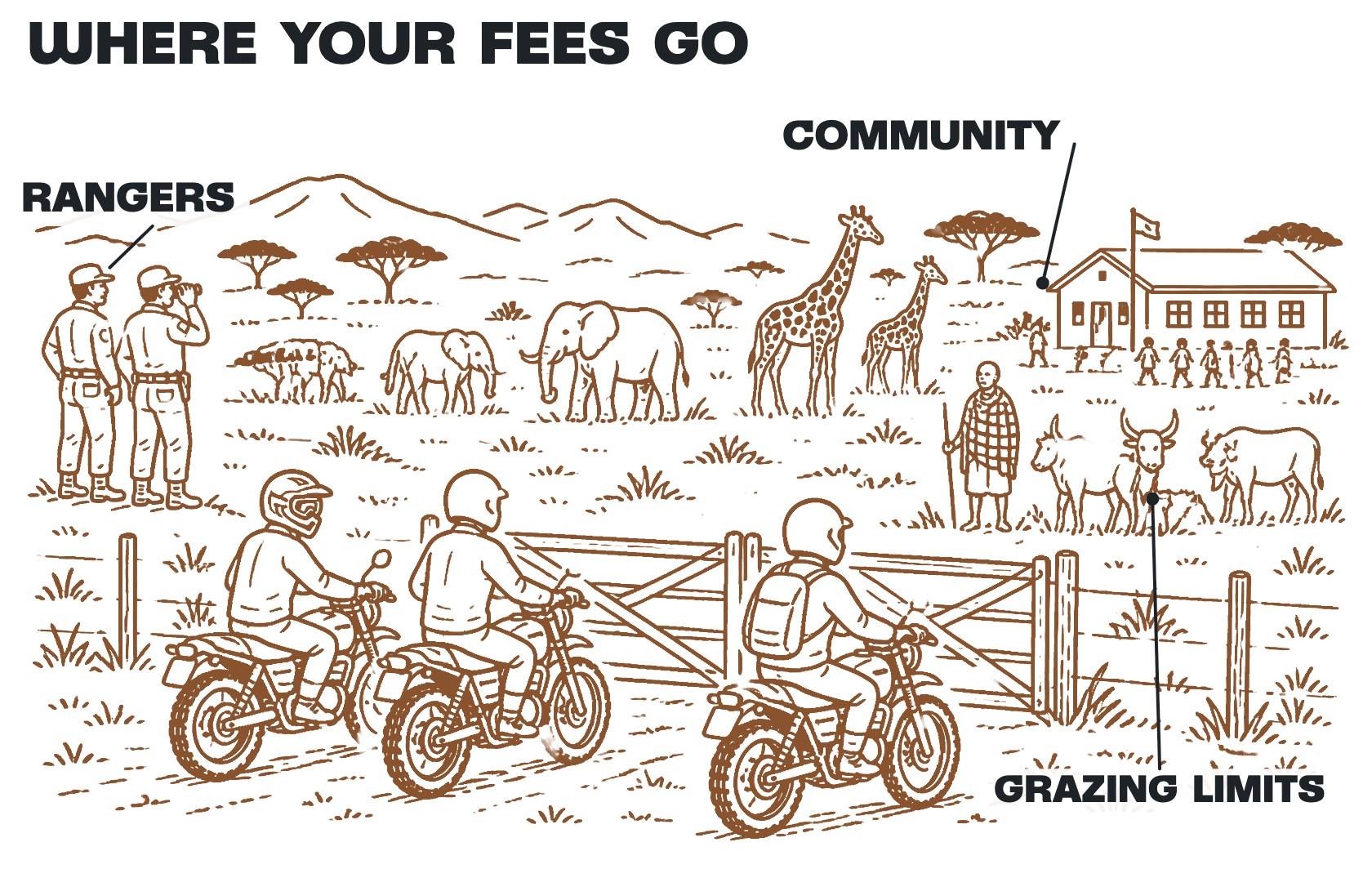
Fees paid by visitors are the engine of the system. When a conservancy earns from tourists, it can pay for:
- Rangers and anti-poaching patrols
- Lease payments to the landowners
- Community water, clinics and school projects
- Limits on livestock grazing and on the number of beds
The Nature Conservancy’s Jonas Mwakima describes the effect in simple terms. When communities see real benefits, they take ownership, and former poachers become rangers and herders become stewards through ecotourism, sustainable grazing and revenue sharing.
There is a practical lesson here. A cheap, high-volume trip that moves many vehicles through a small area sends little money to the land that needs it. A small group that stays on conservancy land for several days sends more per head into the conservation economy, and puts less pressure on any single spot.
The challenges conservation still faces
The picture is not simple, and it helps to know it. The IUCN names habitat loss, poaching, human wildlife conflict, climate change and population growth as the big pressures on species like the elephant, black rhino and Grevy’s zebra. Living beside big animals has a real cost for local families too, from crops trampled by elephants to livestock lost to lions. That is exactly why income from visitors matters.
The Kenya Wildlife Conservancies Association (KWCA) adds that many areas are still unregistered, which stops communities from signing legal agreements with tourism investors. It also argues that careful land-use planning reduces conflict by preventing uncontrolled change and encroachment.
What this means for you: money that reaches the people living beside wildlife is what keeps the habitat open. Choose trips that spend their days on land where that happens.
How to keep your impact low on safari
Good conservation is mostly good manners, plus a bit of planning.
- Stay in conservancy or community-run camps. Your nightly fee goes to the land and the people who protect it.
- Keep your distance. If an animal changes what it is doing because of you, you are too close.
- Follow your guide and the local code. Each conservancy sets its own rules on numbers, distances and viewing time. The Northern Mara conservancies’ code of conduct, for example, limits predator sightings to five vehicles, asks waiting vehicles to stay 100 metres back, gives 15-minute turns and requires 10 metres from predators.
- Stay on existing tracks. Fresh lines through grass scar the land and spook animals.
- Take everything out. Water bottles, wrappers, all of it.
- Never buy wildlife products. The FCDO says buying, selling, killing or capturing protected wild animals, or trading their parts without a licence, is illegal in Kenya.
- Travel in a small group. Fewer people means less noise, less dust and calmer animals.
Where motorbikes fit in
That code of conduct also says something useful for riders. In the Enonkishu, Ol Chorro and Lemek conservancies, motorbikes, quads and bicycles are not allowed unless management organises them. Rules differ from one conservancy to the next. Riding on conservancy land is something you arrange with the people who manage it, not something you improvise.
That is how we run our expeditions: guided, in small groups of no more than eight riders, on routes through private conservancies that normal tourist circuits miss. Our routes are planned by Raj, who lives in Kenya, and Hidde, who lived there for years. For the case for two wheels over a jeep, see our piece on why a motorbike safari beats a traditional one.
Wildlife safety: the rules that keep you safe
A wild animal does not read the brochure. Treat every sighting with respect.
The FCDO’s Kenya travel advice recommends using reputable tour operators, arriving at game reserves in daylight, and following park regulations and warden advice. It warns of risks in viewing wildlife on foot or at close range.
In practice:
- Stay in the vehicle or with your guide. Do not walk off to get a better photo.
- Keep your distance from elephants, buffalo, hippos and predators. Elephants with calves and lone buffalo are the ones to respect most.
- Do not swim in rivers or lakes. The FCDO says it is illegal in national parks and best avoided elsewhere because of wildlife and waterborne disease.
- Obey your guide instantly. If they say stop, switch off or back up, you do it first and ask later.
- Hire a local guide where required. The FCDO notes some hikes, such as on Mount Kenya, require one, and altitude sickness is a risk there.
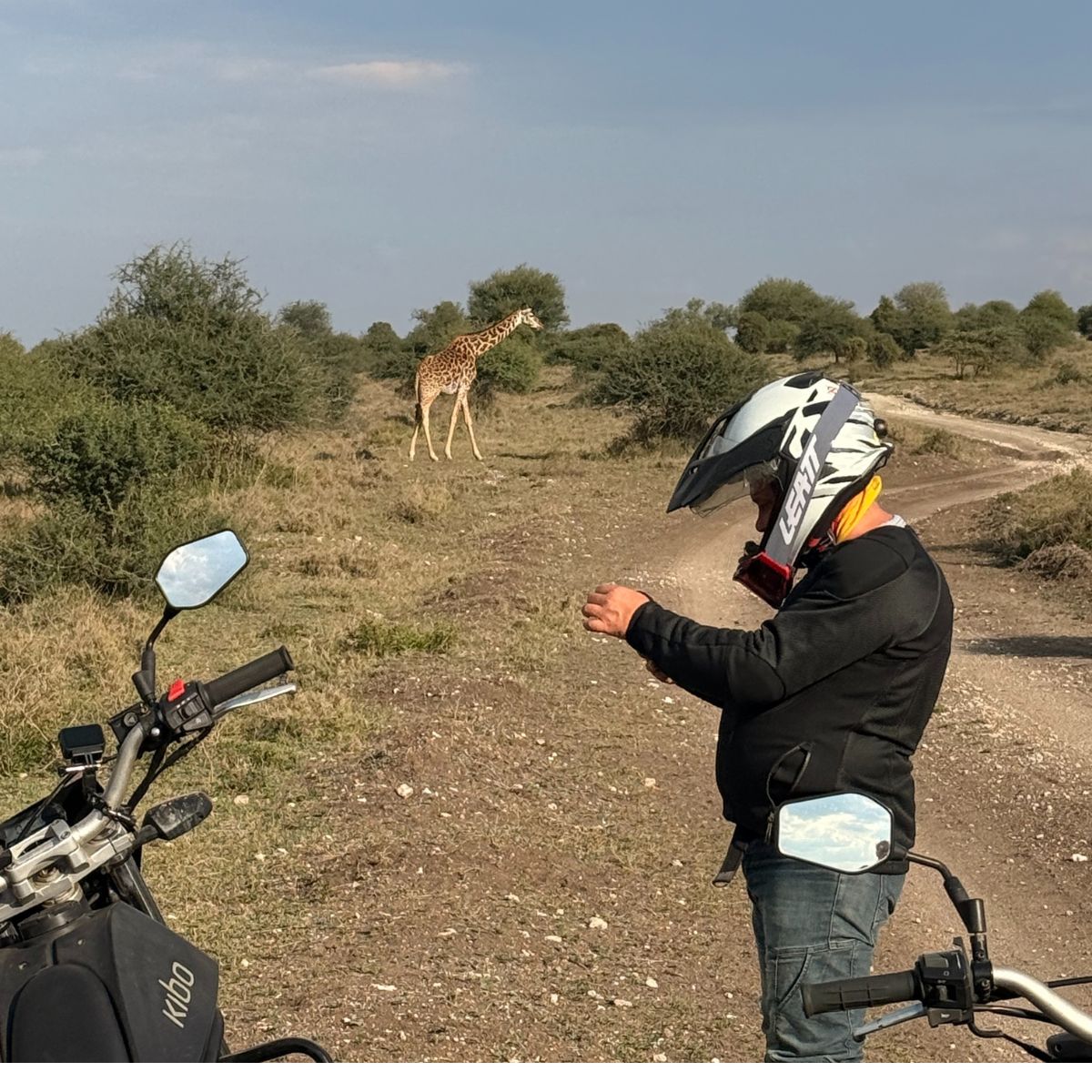
For riders there is one more habit. Animals on and beside the track are normal: a giraffe next to the road, zebra crossing the murram. Slow down early, give them room and let the group bunch up behind the lead rider. Our guide to off-road terrain in Kenya covers what the surface and the wildlife throw at you, and the rider safety guide goes through the risks in more detail.
Remote areas and medical cover
The major parks and conservancies keep ranger posts at their entry points, and incidents involving visitors are very rare. In remote conservancy country, the main thing is having help close by if someone takes a tumble.
That is why every one of our expeditions travels with a doctor, a mechanic and a support vehicle. If something goes wrong, help is already in the group.
Practical checks before you go
Rules change, so treat this as a checklist and read your government’s current Kenya travel advice before you book.
Government advice and insurance
The areas governments advise against are along the Somali border and in the far north east, nowhere near where we ride. Since October 2026, most visitors also need travel health insurance that meets Kenya’s new minimum cover, linked to the eTA application. Check there whether your own policy qualifies.
Still take travel insurance that covers medical evacuation and the activities you plan, and check the wording on off road riding.
Driving licence for riders
Bring your motorbike licence. It is mandatory in Kenya, and without it your insurance will not cover you.A licence in English, like a UK photocard licence, is valid in Kenya for up to 90 days, which easily covers our trips. Is your licence in another language, for example Dutch or German? Then bring an International Driving Permit as an official translation. Dutch riders get one from the ANWB, German riders from their local Führerscheinstelle. Our trip planning guide covers visas, licence, insurance and kit in one place.
Vaccinations and malaria
Book a travel health appointment with your GP or a travel clinic six to eight weeks before you leave. Yellow fever vaccination is recommended for some areas, such as Tsavo, the Masai Mara and Lake Nakuru, and the clinic will advise on malaria tablets for your route. Nothing dramatic: a quick chat, a jab or two, and you are sorted.
Why a guided motorbike expedition suits conservation-minded riders
Self-drive riding in Kenya looks tempting. In practice, conservancy land has its own entry rules, the tracks are long and remote, and a breakdown far from a town can end a trip. A guided expedition removes those problems.
Here is what our trips include, so you can judge fairly:
| What you want | How our expeditions handle it |
|---|---|
| Quiet, low impact travel | Maximum eight riders per group |
| Wildlife, not crowds | Private conservancies and back country, with about 80% off road riding |
| Safety | A doctor, a mechanic and a support vehicle on every trip |
| No logistics | Full board accommodation and airport transfers |
| Local knowledge | Routes scouted by Raj and Hidde, who know these tracks inside out |
If you would like to compare us with the usual safari options, our write-up of what makes our expeditions different sets it out.
Ride Kenya’s conservancies with us
The 2027 Safari Loop is our group expedition in Kenya, 12 to 19 June 2027. It costs €2,785 per rider, with a 10% early bird until the end of 2026. A single room supplement is €295, a bike upgrade is €275, and an extra night at Doc’s Eco Camp is €50 per person. Giraffes are included, no extra charge. The full itinerary is on the 2027 Safari Loop page.
Fancy Riding It Yourself?
Tell us who is coming and what you would like. We will take it from there.
We also run the 2027 India Special Edition at €3,450 per rider, and we build custom trips on request. See all dates and options on our 2027 tours page.
FAQ
Does going on safari in Kenya really help conservation?
It can, when your fees go to parks, conservancies and communities that protect land for wildlife. Studies show tourism fees fund rangers, jobs, water, health and education projects around conservancies. Choose camps and routes that pay the land’s owners directly.
What is a conservancy in Kenya?
It is land managed for wildlife by a community, landowner or company, usually earning its income from low-impact tourism. Conservancies now cover 9.04 million hectares and link up the national parks. Rules on vehicles, numbers and access differ between them.
Is Kenya safe for a safari?
Yes. The parks and conservancies keep ranger posts at their entrances, and incidents involving visitors are very rare. The areas governments warn about are along the Somali border and in the far north east, far from the safari circuits. Follow your guide around animals and you will be fine.
What vaccinations do I need for a Kenya safari?
Yellow fever vaccination is recommended for some areas, such as Tsavo, the Masai Mara and Lake Nakuru. See your GP or a travel clinic six to eight weeks ahead and they will also advise on malaria tablets for your route.
Can I ride a motorbike in Kenya with my own licence?
Yes, bring your motorbike licence: it is mandatory in Kenya and your insurance depends on it.A licence in English, like a UK photocard licence, is valid in Kenya for up to 90 days, which easily covers our trips. Is your licence in another language, for example Dutch or German? Then bring an International Driving Permit as an official translation. Dutch riders get one from the ANWB, German riders from their local Führerscheinstelle.
Sources
- Frontiers in Conservation Science: Winning space for conservation, growth of conservancies in Kenya
- IUCN Country Brief: Kenya (2025)
- KWCA: Unlocking the Potential of Conservancies
- The Nature Conservancy: Kenyan communities lead conservation
- Northern Mara Conservancies Code of Conduct
- FCDO Kenya travel advice
- TravelHealthPro: Kenya
- CityNews Kenya: Is Kenya safe for tourists in 2026?