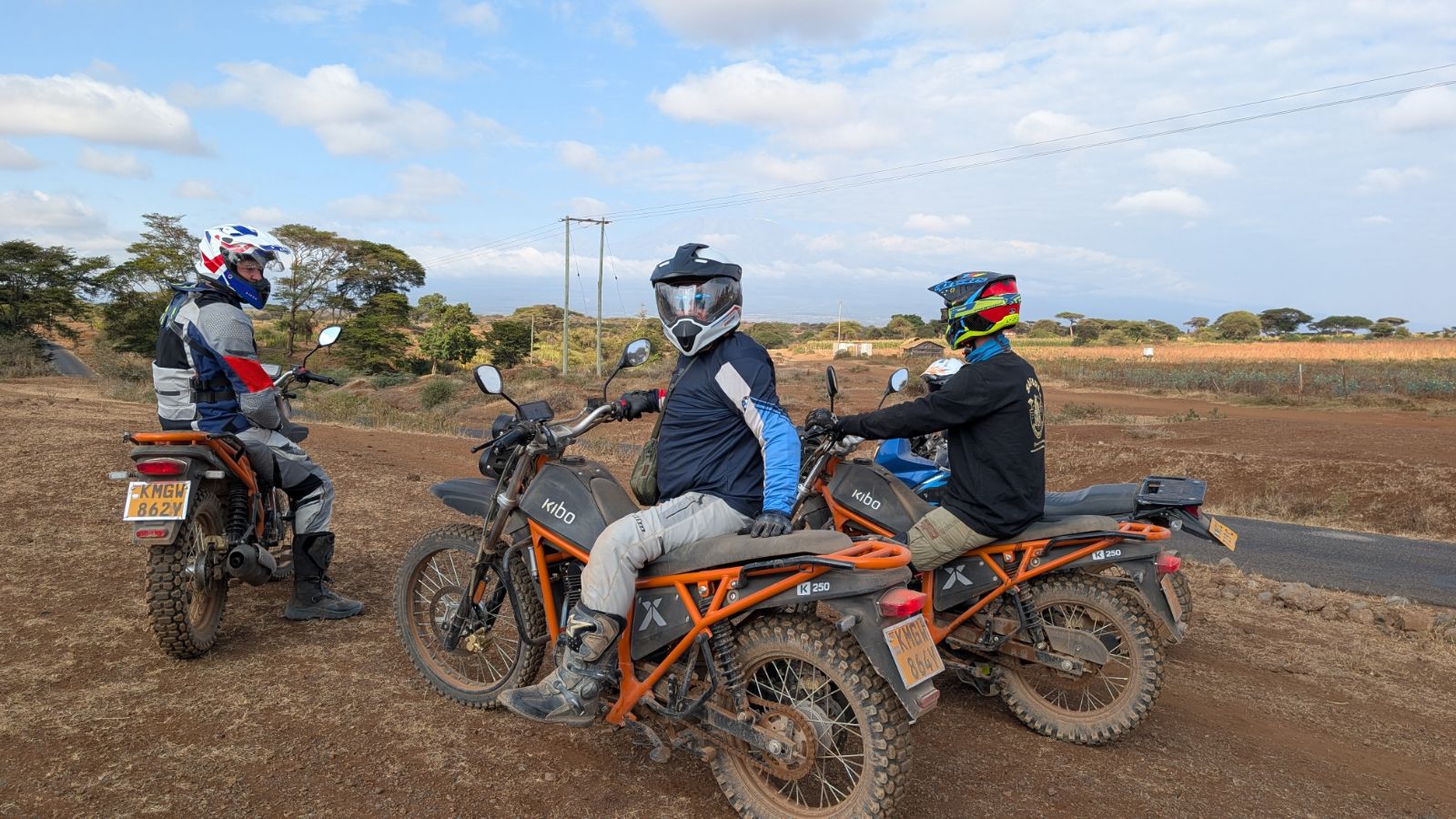
Kenya is one of the best places in Africa to ride a motorbike. Red dirt tracks, the Great Rift Valley, giraffe next to the road and Kilimanjaro on the horizon. It is also a place that rewards riders who come prepared.
This guide is what we tell our own friends before they ride here. Roads, safety, fuel, water, the rules nobody writes down and the mindset that makes it all work. Whether you ride with a tour or go it alone.
What Are the Roads Like in Kenya?
You get everything, sometimes in one morning.
- Tarmac highways. Mostly good, but busy with trucks, buses and matatus (minibus taxis). Expect potholes, even on main roads.
- Speed bumps. Every village has them, and many are not marked. Locals call them sleeping policemen. They will wake you up.
- Murram roads. Red gravel and dirt, the backbone of rural Kenya. Great fun when dry. Corrugated in places.
- Sand and fesh fesh. Fine dust that hides ruts and rocks underneath. Weight back, gas on, stay loose.
- Black cotton soil. Hard as concrete when dry. After rain it turns into grease. If it has rained, take another route or wait.
More detail in our guide to riding terrain in Kenya.
Is It Safe to Ride a Motorbike in Kenya?
Yes, if you ride smart. The biggest risks are not wild animals or crime. They are traffic, road surface and fatigue. A few rules keep you out of trouble.
Never ride after dark
This is the big one. Kenya sits on the equator, so the sun sets around half past six all year round. After that you share the road with unlit trucks, cyclists, pedestrians, livestock and potholes you cannot see. Plan every day so you are parked with a cold drink before sunset.
Assume nobody has seen you
Kenya drives on the left. Matatus stop wherever they like and overtaking on blind bends is a national sport. Keep your lights on, leave space and give big vehicles room. On the highway, the biggest vehicle wins. Every time.
Watch for animals
Goats, cattle, donkeys and the odd zebra wander onto the road without warning. Near herders, slow down. Where there is one goat, there are twenty more behind the bush.
Wear proper gear
Yes, it is hot. Wear it anyway. A good helmet, boots, gloves and a vented jacket with armour. Add goggles or a buff for the dust.
Want the longer answer? Read Is it safe to ride a motorbike in Kenya?
Fuel, Water and Spares
Out here, the basics matter more than the bike.
- Fuel. Towns have stations, remote areas often do not. Check your route before you leave and fill up every chance you get. On long stretches, carry extra fuel. Some small stations only take cash or M-Pesa, so keep Kenyan shillings on you.
- Water. Always carry at least two litres. Heat and dust dry you out faster than you notice, and a breakdown in the bush can mean a long wait.
- Tools and spares. A puncture kit, pump, tyre levers and a few basic tools. Kenya runs on small motorbikes, so there is a boda boda mechanic in almost every village. They can fix nearly anything with wire and patience.
- Navigation. Download offline maps. On dirt roads, Google Maps is optimistic at best. Ask locals, they know which road is actually open.
Paperwork and Police Checks
Carry your driving licence, an International Driving Permit and the bike papers. Police checkpoints are normal on main roads. Stay friendly, stay patient and keep your documents in one easy pocket. Check that your travel insurance covers motorbike riding, including the engine size you will ride.
Also good to know: motorbikes are not allowed inside most Kenyan national parks. The best wildlife riding happens on the roads around them, in conservancies and on community land.
When Is the Best Time to Ride?
Kenya has two rainy seasons. The long rains fall roughly from March to May, the short rains around October to December. On dirt roads, that makes a big difference. June to September is dry, green and cooler, which is why we ride in June. Full breakdown in our month by month guide.
Rather Ride With a Crew Behind You?
Small groups, your own bike, a support vehicle and a mechanic. We sort the route, fuel and beds. You just ride.
Pole Pole: Take Your Time
In Swahili, pole pole means slowly slowly. It might be the best riding advice in Africa.
Kenya is not a place to chase kilometres. Stop for the kids who wave at you. Stop at the viewpoint. Stop when a giraffe crosses the road, because it will. The riders who enjoy Kenya most are the ones who ride a bit slower and look around a lot more.
Overlanders have a line for it: prepare for everything, expect nothing. The road will change, the plan will change, the weather will change. Roll with it. That is the adventure.
Riding Kenya on Your Own or With a Tour?
Both work. It depends on your time, your experience and how much sorting out you want to do.
- On your own. Maximum freedom, lower cost. But you arrange the bike, the route, the stays, the permits and the back up plan yourself. Best if you have time and some experience riding in Africa.
- With a guided tour. Someone who knows the roads leads the way. A support vehicle carries luggage, fuel and spares. You spend your energy on riding, not on logistics.
If you go for a tour, ask these questions before you book:
- Group size. Small is better. Fewer riders means more riding and less waiting.
- Support. Is there a support vehicle and a mechanic with the group?
- Who leads. Do the guides actually ride these roads themselves?
- Off road share. Some tours are mostly tarmac. Ask for the percentage.
- What is included. Fuel, meals and transfers add up fast if they are extra.
That is how we built our own Safari Loop: eight days, around 80% off the tarmac, max eight riders and a crew right behind you. Riding elsewhere in Africa too? Read why Kenya is the best place to start.
Quick Answers
Which side of the road does Kenya drive on?
The left, like the UK.
Do I need off road experience to ride in Kenya?
You do not need to be an expert. If you are comfortable on gravel and loose roads, you will be fine on most routes. Take it slow on sand and never ride wet black cotton soil.
Can I ride a motorbike in Kenya’s national parks?
In most parks, no. Plan your wildlife riding around the parks, in conservancies and on community land.
Can I pay for fuel by card?
In towns, usually yes. In rural areas, bring cash or M-Pesa.
Ready for the Trip of a Lifetime?
Two tours in 2027. The Safari Loop in Kenya and a one time Special Edition in India. Max eight riders in Kenya, nine in India.